
A washing machine hose gives out overnight, or a winter storm pushes water under the back door, and by morning a Folsom homeowner is standing in an inch of water wondering what happens next. Water damage rarely waits for a convenient time, and the first few hours after it’s discovered often decide how much of the home can be saved.
Left alone, wet drywall, flooring, and insulation start breaking down within a day or two, and mold can take hold shortly after that. The damage spreads quietly behind walls and under flooring long before it shows up on the surface.
This guide covers what causes water damage around Folsom, the warning signs worth watching for, and what actually happens once a restoration crew gets to work. Knowing the process ahead of time makes it easier to make good decisions under pressure, and our team walks Folsom homeowners through every step of water damage restoration.
What Causes Water Damage in Folsom Homes
Folsom sits along the American River and close to Folsom Lake, and the area sees the distinct wet and dry seasons typical of the greater Sacramento region. That seasonal swing, combined with aging plumbing in some of the city’s older neighborhoods and heavy irrigation use through the summer, creates a few common paths for water to find its way into a home.
- Winter storms and atmospheric river systems that overwhelm gutters, downspouts, and yard drainage
- Burst or leaking pipes, especially in homes with older galvanized plumbing
- Water heater failures and worn supply lines behind washing machines, dishwashers, and refrigerators
- Roof leaks following wind-driven rain
- Slab leaks and foundation seepage during periods of heavy or prolonged rainfall
- Poor drainage around homes built on sloped lots near the foothills, which can direct runoff toward the foundation
Any of these can turn into a significant restoration project if the water sits for more than a day, which is why catching the source early matters as much as cleaning up afterward.
Warning Signs Your Folsom Home Needs Water Damage Restoration
Some water damage is obvious the moment it happens. Other cases develop slowly, hidden inside walls or under flooring, and homeowners only notice the secondary effects. Watch for:
- Discoloration, bubbling, or peeling paint on walls and ceilings
- A musty or earthy smell that doesn’t go away with normal cleaning
- Warped, cupped, or soft flooring, especially hardwood or laminate
- Rising water bills with no clear explanation, which can point to a hidden leak
- Visible mold growth near baseboards, corners, or windows
- Sagging ceilings or soft spots in drywall
If any of these show up, it’s worth having the area inspected before the damage, and the cost of repairing it, grows.
What to Expect During the Water Damage Restoration Process
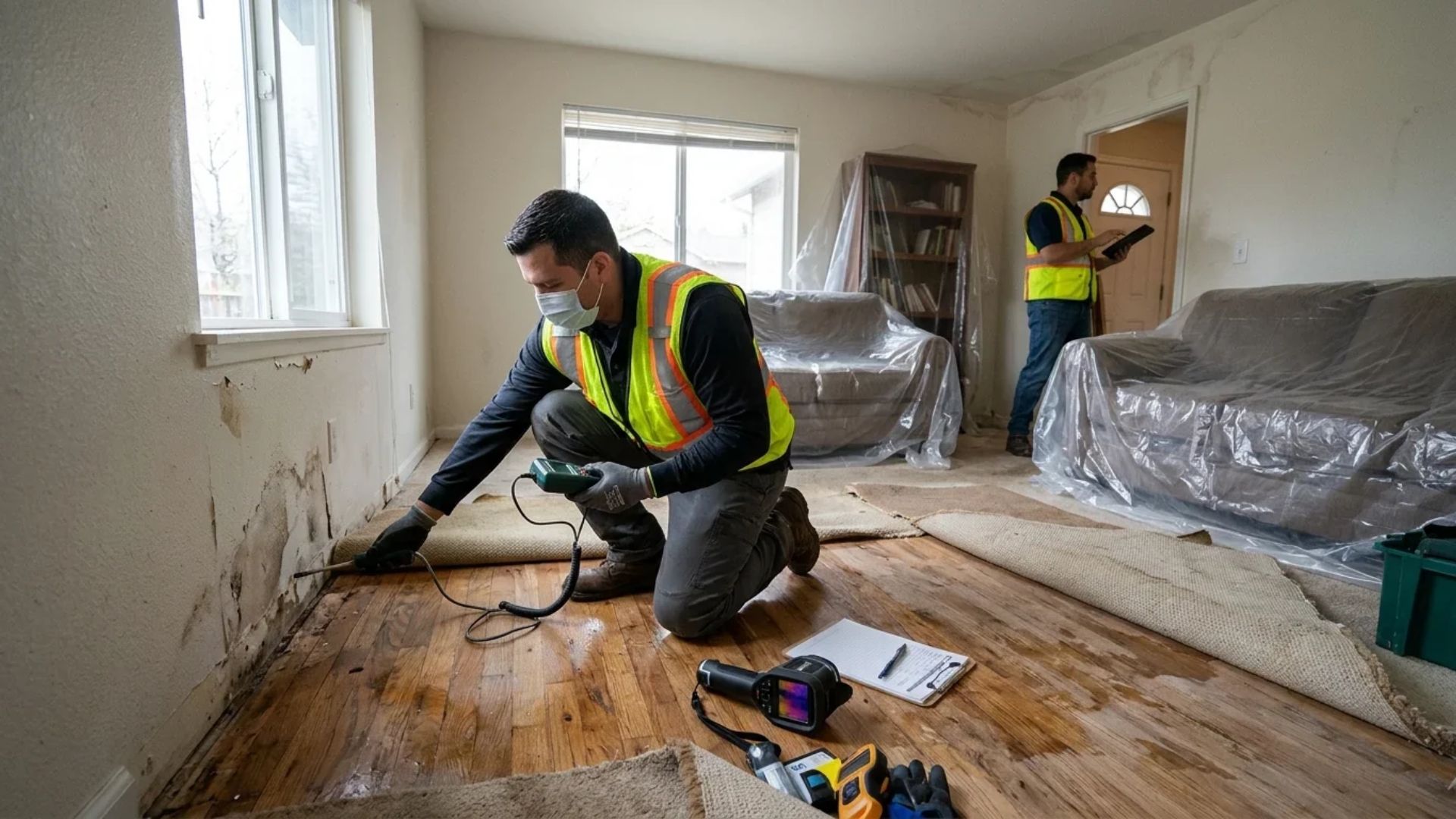
1. Inspection and Damage Assessment
The process starts with a thorough walkthrough to find the source of the water and map out how far it has traveled. Moisture meters and thermal imaging help identify wet materials that aren’t visible to the eye, including inside walls and under subflooring. This step determines the scope of work and which materials can be dried in place versus removed.
2. Water Extraction and Removal
Standing water gets pumped or vacuumed out using industrial extraction equipment, which removes far more water, far faster, than a mop or household wet vac. Materials too saturated to save, such as soaked carpet padding or swollen drywall, are removed at this stage to prevent further contamination and keep the drying process moving.
3. Drying and Dehumidification
Industrial air movers and dehumidifiers pull remaining moisture out of walls, floors, and furniture. Drying times vary depending on how much water was involved and what materials absorbed it, but most structures need several days of continuous airflow before moisture levels return to a safe range.
4. Cleaning and Sanitizing
Once materials are dry, surfaces are cleaned and treated to address bacteria, odors, and the conditions that allow mold to grow. This step matters most when the water involved came from an appliance leak or storm intrusion rather than a clean supply line break.
5. Repairs and Restoration
The final phase covers rebuilding whatever had to be removed, from drywall and flooring to trim and paint, so the space looks and functions the way it did before the water arrived.
How Long Does Water Damage Restoration Take?
Most residential water damage restoration projects take three to seven days for drying alone, with repairs adding more time depending on what needs to be rebuilt. A single wet carpet caught quickly resolves faster, while water that has been sitting for days or spread across multiple rooms takes longer to fully dry and repair.
Working With Your Insurance Company
Most homeowners insurance policies cover sudden and accidental water damage, such as a burst pipe, though coverage for gradual leaks or outside flooding varies by policy. Documenting the damage with photos before cleanup begins, and keeping receipts for any temporary repairs, helps support a claim. We work alongside homeowners throughout the claims process and can provide the documentation adjusters typically request.
Protecting Your Folsom Home From Future Water Damage
A few routine habits can reduce the odds of dealing with this again:
- Inspect supply lines on washing machines, dishwashers, and water heaters once a year, and replace any that show cracking or bulging
- Clear gutters and downspouts before the rainy season to keep water moving away from the foundation
- Know where the home’s main water shutoff valve is located so it can be closed quickly in an emergency
- Grade soil and landscaping away from the foundation, particularly on sloped lots
- Address small leaks right away rather than waiting to see if they get worse
When Mold or Sewage Complications Follow Water Damage
Water damage that isn’t dried quickly enough can lead to mold growth within as little as 24 to 48 hours, and water from an appliance or storm can sometimes carry contaminants that call for more thorough sanitizing. When either situation comes up, our mold remediation and sewage cleanup services pick up where water extraction leaves off, so homeowners aren’t left managing a second problem on their own.
Frequently Asked Questions
Is water damage restoration covered by homeowners insurance?
Many policies cover sudden water damage like a burst pipe, though **coverage depends on the specific policy and the source of the water**. Reviewing the policy details or asking an adjuster directly is the best way to confirm coverage before restoration begins.
Can I dry out water damage myself?
Fans and a dehumidifier can help with very minor, localized water exposure, but they rarely reach moisture trapped inside walls, subflooring, or insulation . Professional drying equipment and moisture monitoring catch what a do-it-yourself approach typically misses.
How soon does mold start growing after water damage?
Mold can begin developing within 24 to 48 hours in warm, humid conditions, which is why fast water extraction and drying matter so much. The longer materials stay wet, the higher the chance that mold remediation becomes part of the project.
What should I do immediately after discovering water damage?
Shut off the water source if possible, move valuables and furniture out of the affected area, and avoid walking through standing water near outlets or electrical panels. Taking photos before cleanup starts also helps with any insurance claim.
Will I need to move out during water damage restoration?
It depends on the extent of the damage and which rooms are affected. Many homeowners can stay in their home during drying and repairs, though significant damage to kitchens, bathrooms, or multiple rooms may require temporary relocation.
Final Thoughts on Water Damage Restoration in Folsom, CA
Water damage rarely announces itself ahead of time, but how fast it gets addressed makes the biggest difference in what can be saved. A quick response to shut off the source, document the scene, and start extraction keeps a bad morning from turning into weeks of rebuilding.
If your Folsom home has standing water, a soaked carpet, or a ceiling stain that keeps spreading, our team at RESCO handles water damage restoration from the first inspection through final repairs. Reaching out as soon as the water is discovered gives us the best chance to dry and save more of your home.